What SSL certificate for a website?
10/10/2015
SSL certificates come in several flavors:
- self-signed,
- approved,
- accredited,
- with extended certification.
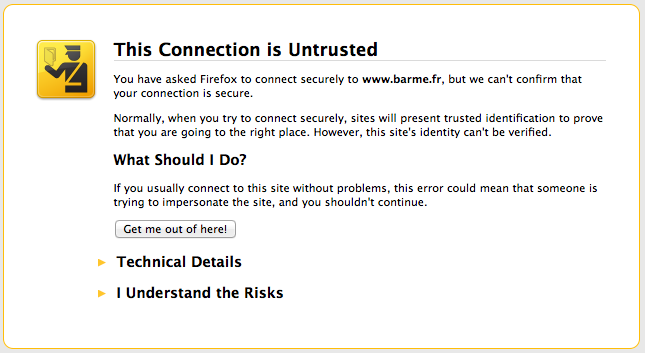
The first version is free, but you still need to know how to do it; the procedure is simple but relatively indigestible and opaque for the layperson. The only small drawback is that visiting a website with a self-signed SSL certificate triggers the display of a harmless but uninviting message:
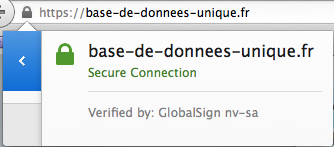
The next level, the approved SSL certificate goes unnoticed. We know who approved it, but we don't know for whom...
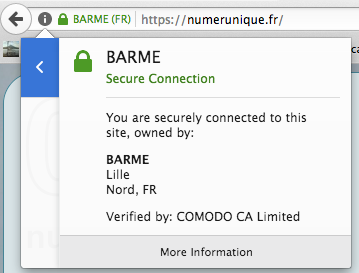
And to have this information displayed directly, with the famous "green bar" so reassuring, you need the top of SSL certificates: the one with extended validation:

In fact, an SSL certificate for a website serves to:
- encrypt exchanges,
- validate the site's legitimacy.
For point 1, they are all equal; the self-signed certificate, free, is perfect.
For point 2, it depends on the visitors:
- those who understand how it works will have no qualms about adding a "security exception" on a self-signed certificate,
- most visitors will be content with acceptance of the certificate by their browser (no alert message),
- the most anxious will demand the "green bar" (extended validity certificate),
- the most rigorous will check the certificate details, even with a "green bar".
To have automatic browser recognition or the "green bar", you have to pay. But contrary to a widely held idea, you pay for a real service: checking the site's legitimacy.
Even for automatic recognition, a serious certification authority will verify that the certificate requester is indeed the one who legitimately controls the domain name.
For an extended validity certificate, it's a complete investigation that verifies everything (official company registration, address, phone) and directly contacts the manager and 2 other people (requester and approver)!
Now, the SSL certificate is a criterion retained by search engines to favor the visibility of sites that have them. And with the awareness of the importance of protecting private data on the Internet, we can expect this to become almost unavoidable.
To be accompanied in setting up https access to your site, it's here: