The infernal spiral of updates
21/06/2017
It has now become well established: hardware, systems, and software must be regularly updated. To the point that it's common to hear that such and such software is worthless anymore since it's no longer updated! This kind of principle elevated to dogma is most often spread by those who desperately seek to compensate for their incompetence with easy-to-understand rules.
The problem with updates is that they are most often (but not always) useless or even detrimental: some bring more bugs or security flaws than they fix.
The most annoying with operating system updates is that they generally imply the need for a computer change. The most exasperating is having to rediscover the new access to a command, service, or functionality that is otherwise identical or even degraded...
And if a program that is no longer updated had simply reached maturity?
It's even worse for equipment.
Purchased 2526 days ago as of the date of this photo, this phone (a HTC Desire 2010) was begging to be replaced.
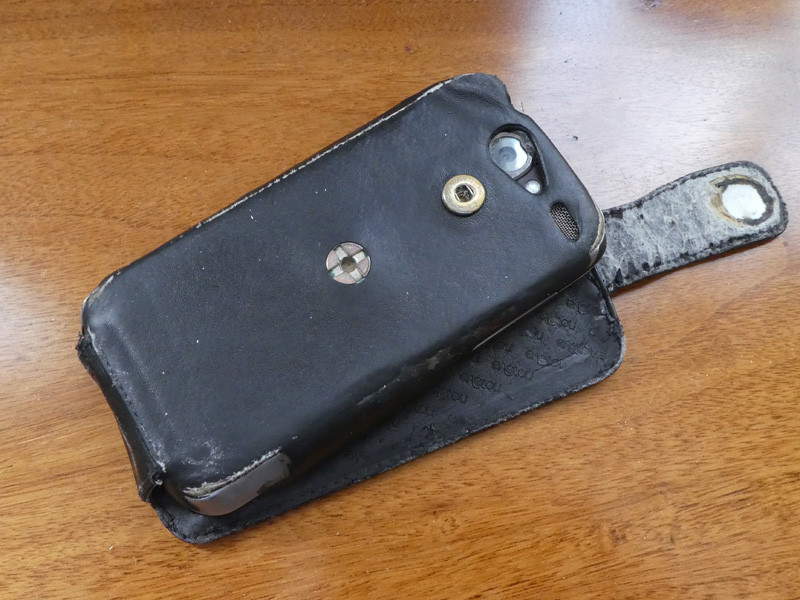
Today there is an incredibly rich choice for a phone:
- Android
- iOS
In the first case, you entrust all your personal data to Google, in the second to Apple. And moreover, you pay (dearly) to do it, it's still genius all that.
In this case, it's choice 2 that was made. This results in an interesting problem for a computer scientist: transferring 419 contacts from a 2010 Android phone to an iPhone.
To spice things up a bit, we want to avoid going through iCloud. A priori there is nothing ultra secret in these contacts but it's a matter of principle, so if it's a matter of principle...
Extracting contacts from a 2010 Android is simple, in a few touches you have a standard .vcf on the SD card that you can even retrieve via Bluetooth.
Importing to the iPhone looks less good: the chosen model is not "resistant to splashes and water" but it is perfectly sealed against any form of data exchange, whatever they may be, except by going through iCloud or iTunes, of course.
Go for iTunes, officially it stays local. You still need to use a cable connection for synchronization with iTunes. The Bluetooth functionalities supported between a Mac and an iPhone are very economical... only a network connection is possible. What added value!
Alas, the MacBook Air of the owner of the old HTC and the new iPhone demands an update of iTunes as a prerequisite to any synchronization attempt. iTunes being up to date, it would be necessary to start by doing an update of MacOS. The operation is risky, the MacBook Air in question is from another era (i.e. a few years old).
So we go through another more recent Mac, on which we create a temporary account. We still need to do an update of iTunes there. And then? We discover that contact synchronization can now only be done via iCloud :-((
Moral, when you change phones, you also need to change computers. They should offer a bundle.
Fortunately, there is a way to bypass the blockage: a simple email (from a messaging service foreign to Apple or Google) with the .vcf as an attachment and hop, we recover these 419 contacts on the iPhone, without going through iCloud, as promised.
PS: it's impressive how the i key wears out faster when talking about Mac.